Mastering Negotiations with Powerful Suppliers
- Ninad Patil
- Business , Negotiation
- May 1, 2024
Beyond Price: Strategic Negotiations with Powerful Suppliers
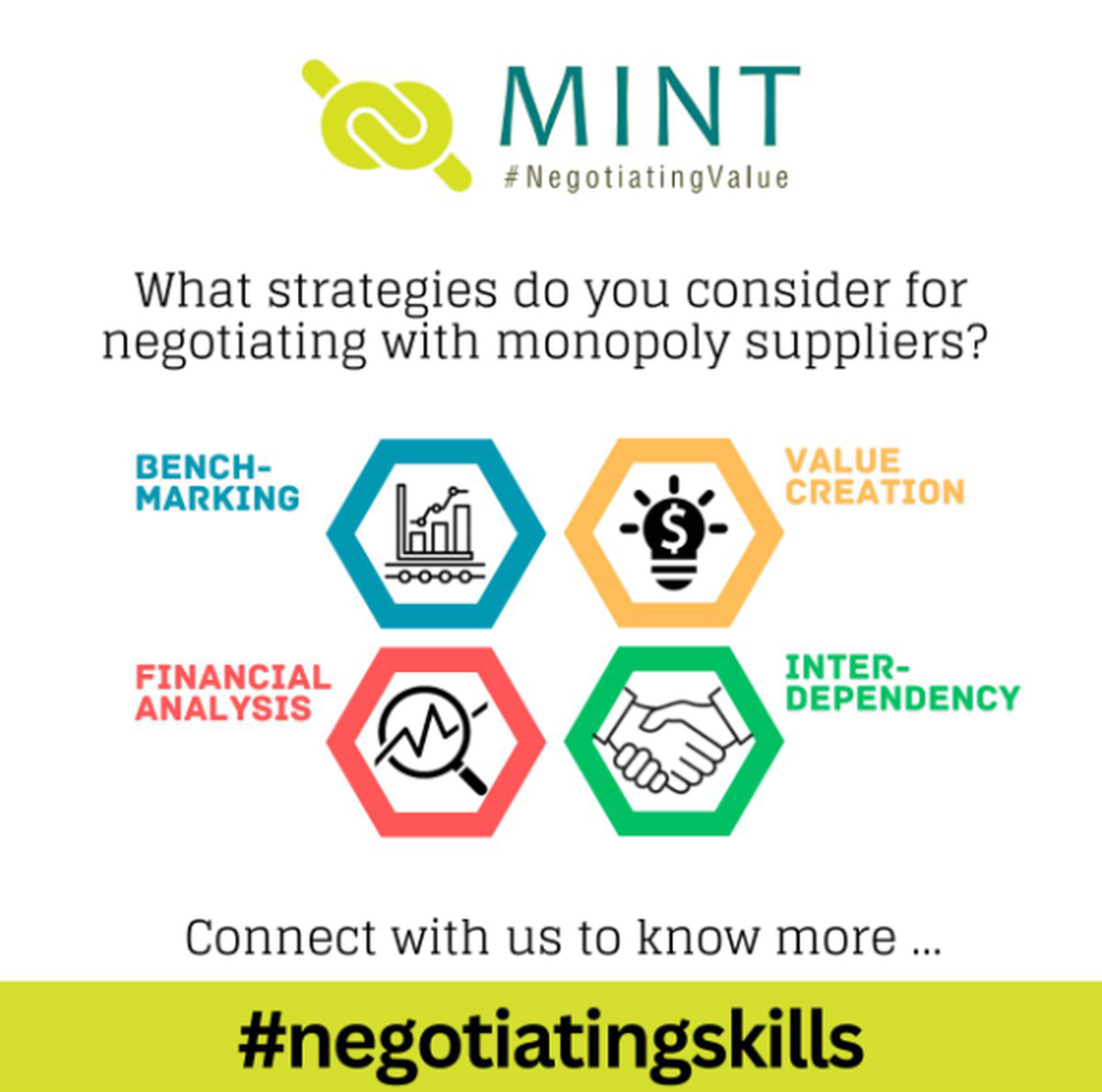
Negotiating with a powerful or monopoly supplier often feels like navigating a minefield. They seemingly hold all the cards, dictating terms and prices. However, at the MINT Negotiation Program, we emphasize that even in these challenging scenarios, strategic approaches focusing on benchmarking, interdependence, mutual value creation, and robust financial analysis can significantly improve your outcomes. It’s about shifting from a reactive stance to a proactive, value-driven one.
Leveraging Benchmarking and Financial Analysis
Firstly, don’t assume their prices are non-negotiable. Conduct thorough benchmarking to understand market rates for similar products or services, even if direct comparisons are difficult due to the supplier’s unique position. This requires looking beyond the immediate offering to comparable alternatives, substitute goods, or even the cost of in-house production.
Simultaneously, perform deep financial analysis on the supplier. Can you estimate their cost structure, profit margins, and key financial drivers? Understanding their economic realities can reveal potential areas for negotiation, allowing you to challenge their pricing based on data rather than just hope.
Cultivating Interdependence and Mutual Value Creation
Secondly, shift your focus from a transactional mindset to one of interdependence. While they might be powerful, they likely rely on your business in some way – perhaps for volume, market presence, or innovation. Identify and amplify these points of reliance.
Can you propose initiatives that drive mutual value creation? This could involve:
- Collaborating on supply chain efficiencies.
- Co-developing new products or features.
- Exploring long-term strategic partnerships that benefit both organizations.
When you frame the discussion around shared growth and profitability, you move beyond a simple price haggle to a more strategic partnership.
Knowing Your Alternatives
Finally, always have a strong BATNA (Best Alternative To a Negotiated Agreement). This isn’t just about finding another supplier; it’s about understanding your true walk-away point, bolstered by your financial analysis and benchmarking.
What are your real costs of switching, or what would an alternative solution entail? Having a well-researched BATNA empowers you to negotiate with confidence, ensuring you don’t succumb to unfavorable terms simply because you feel you have no choice.
By integrating these strategies, you transform a potentially lopsided negotiation into a more balanced discussion, where value, not just power, becomes the driving force. How will you apply these insights to your next negotiation with a powerful supplier?