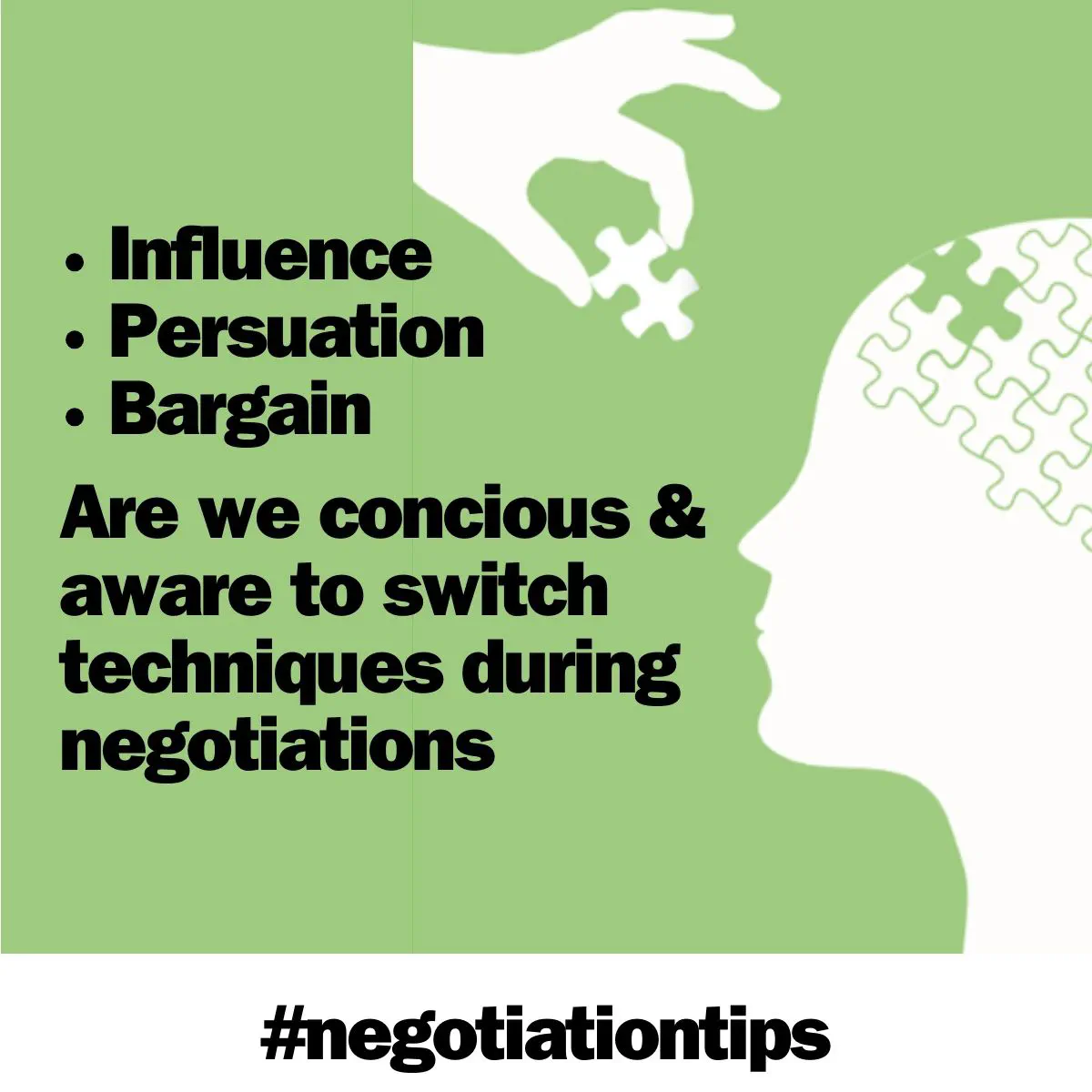
Conscious Switch Between Influence, Persuasion & Bargaining
- Ninad Patil
- Business , Negotiation
- March 23, 2024
Table of Contents
In the dynamic realm of negotiations, communication stands as the cornerstone of success. Whether it’s sealing a business deal or resolving conflicts, the ability to adapt communication techniques during live negotiations is pivotal. In today’s fast-paced world, where technology and globalization redefine the landscape, the way we communicate in negotiations is undergoing a profound transformation.
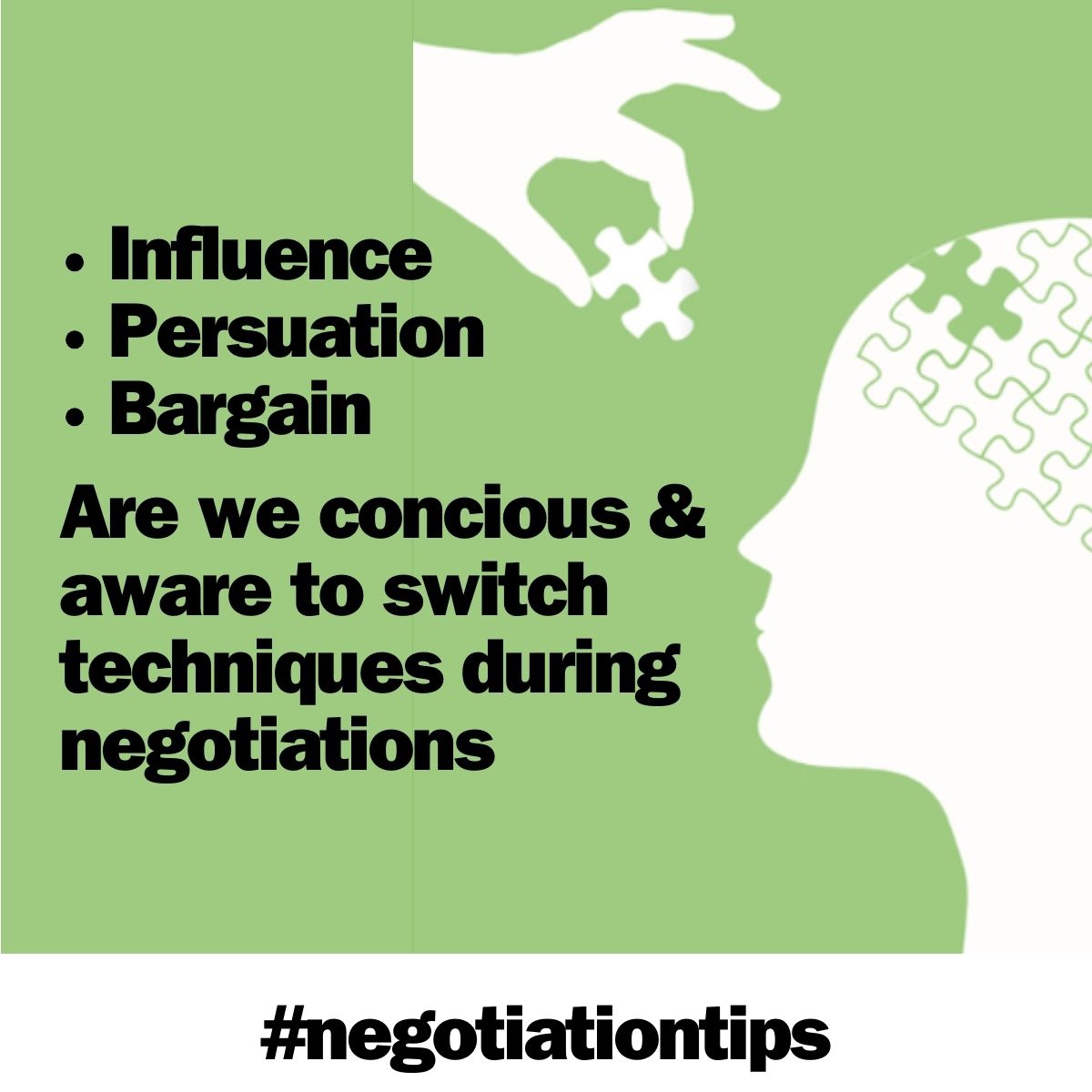
Gone are the days of rigid, one-size-fits-all communication approaches. Instead, negotiators are embracing a more fluid and adaptive style, attuned to the nuances of each situation. Here’s a glimpse into the changing communication techniques reshaping live negotiations:
Real-Time Feedback Loops
In traditional negotiations, feedback often came after the fact, leaving little room for immediate course correction. However, modern communication tools allow for real-time feedback loops. Whether through video conferencing platforms or instant messaging, negotiators can gauge reactions, adjust their messaging, and address concerns on the fly, fostering a more agile negotiation process.
Multimodal Communication
With the rise of remote negotiations, negotiators are leveraging various communication channels simultaneously. From verbal exchanges to visual aids and written documentation, embracing a multimodal approach ensures that messages resonate across diverse preferences and communication styles, enhancing comprehension and fostering deeper engagement.
Cultural Sensitivity
In an increasingly interconnected world, negotiations often transcend geographical boundaries, bringing together individuals from diverse cultural backgrounds. Effective communicators recognize the importance of cultural sensitivity, adapting their language, tone, and gestures to bridge cultural divides and foster trust and mutual understanding.
Emotional Intelligence
Beyond mere words, successful negotiators recognize the role of emotions in shaping outcomes. By harnessing emotional intelligence, they navigate tense moments with empathy and resilience, defusing conflicts and building rapport even in the heat of negotiations. Active listening, empathy, and emotional regulation are key pillars of this approach.
Data-Driven Insights
In today’s data-driven era, negotiators are increasingly relying on analytics to inform their communication strategies. From predictive modeling to sentiment analysis, data-driven insights offer valuable cues for tailoring messages, predicting counterarguments, and crafting persuasive narratives that resonate with stakeholders’ interests and priorities.
Adaptive Flexibility
Finally, perhaps the most significant shift in communication techniques during live negotiations is the emphasis on adaptive flexibility. Negotiators no longer adhere rigidly to predefined scripts but instead remain agile and responsive to unfolding dynamics. Whether it’s pivoting in response to new information or recalibrating strategies mid-negotiation, adaptive flexibility enables negotiators to stay one step ahead in pursuit of mutually beneficial outcomes.
Tip
The art of negotiation is undergoing a profound evolution, driven by technological advancements, cultural shifts, and changing societal norms. By embracing fluid communication techniques that prioritize real-time feedback, cultural sensitivity, emotional intelligence, data-driven insights, and adaptive flexibility, negotiators can navigate the complexities of live negotiations with confidence and finesse, ultimately unlocking new opportunities for collaboration and mutual success.