What Factors Add Complexity to Your Business Negotiations?
- Ninad Patil
- Business , Negotiation
- April 22, 2024
Business negotiations today are rarely straightforward. What once may have been a simple conversation over terms and pricing has evolved into a complex dance of competing interests, shifting dynamics, and strategic considerations. Whether you’re negotiating deals, partnerships, or internal agreements, understanding the factors that add complexity is key to navigating them effectively.
At MINT Negotiation Programs, we train professionals to manage exactly these complexities with structure, clarity, and confidence. Here’s what typically makes negotiations more challenging:
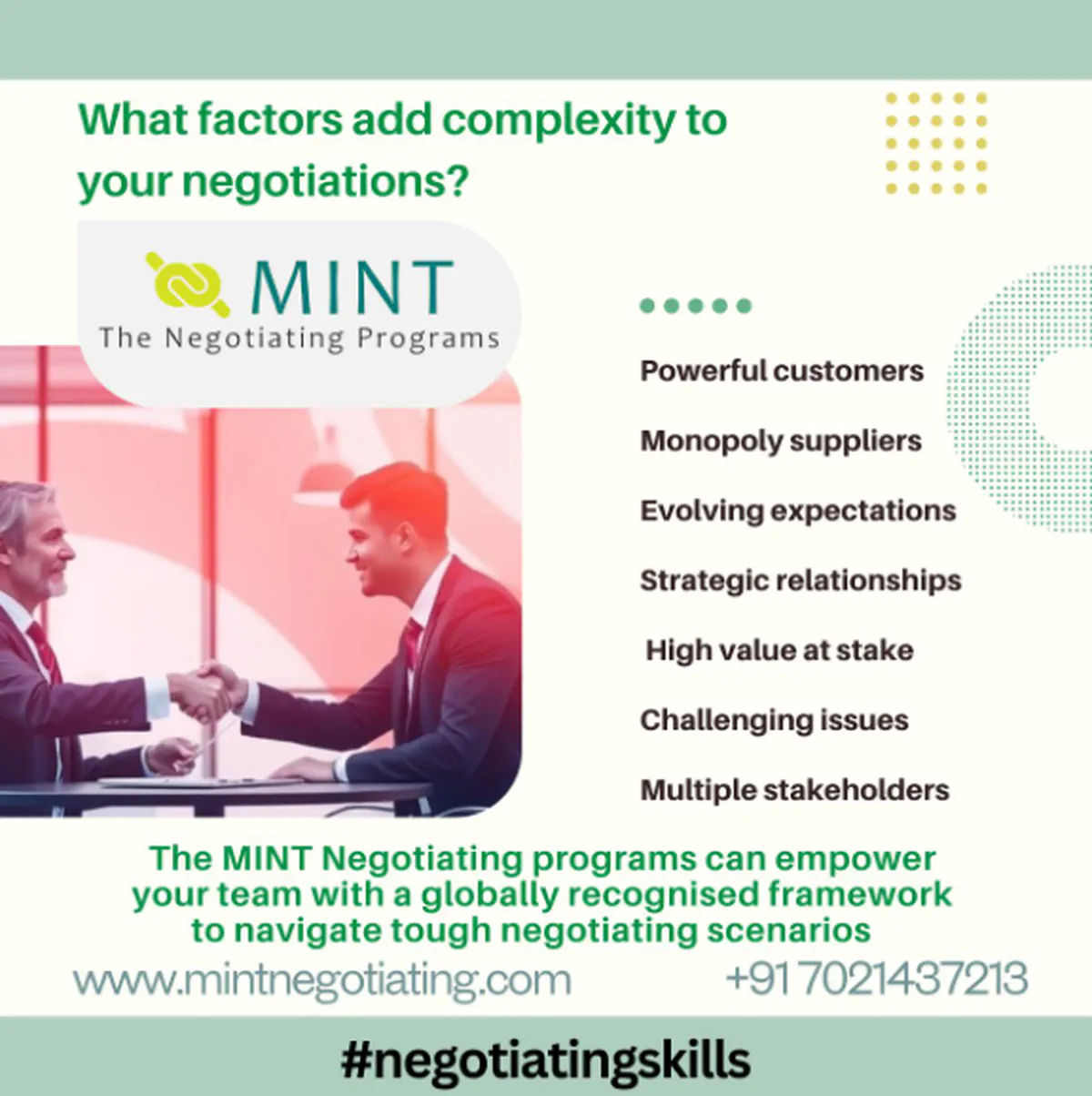
Powerful Customers
When you’re negotiating with a customer who has significant market power or multiple alternatives, the pressure to concede can be intense. Without a strong value narrative and strategic positioning, you risk giving away too much, too soon.Monopoly or Strategic Suppliers
Suppliers who hold unique capabilities or patents know their worth. Navigating such negotiations requires creativity, risk mitigation strategies, and long-term planning beyond price haggling.High-Stakes Outcomes
When millions are on the table or when reputational risk is involved, emotions run high. High-stakes deals test not just your skills, but your composure and decision-making.Challenging or Sensitive Issues
Negotiations often involve difficult conversations — such as performance concerns or pricing disputes. Success depends on balancing assertiveness with diplomacy.Multiple Stakeholders
The more people involved, the more agendas and communication gaps arise. Aligning everyone requires structure, patience, and stakeholder mapping.Strategic Relationships
When the counterpart is a long-term partner, you must think beyond the immediate outcome. How do you protect the relationship while still pushing for value?Evolving Expectations
Business priorities shift, and what was agreed upon yesterday might no longer work tomorrow. Flexibility and adaptability are now essential negotiation skills.
At MINT, we prepare you to handle these complexities with a structured approach and a strategic mindset. Because when stakes are high and variables are many, success comes not from improvisation — but from mastery.